
Hip and Knee Replacement Surgery
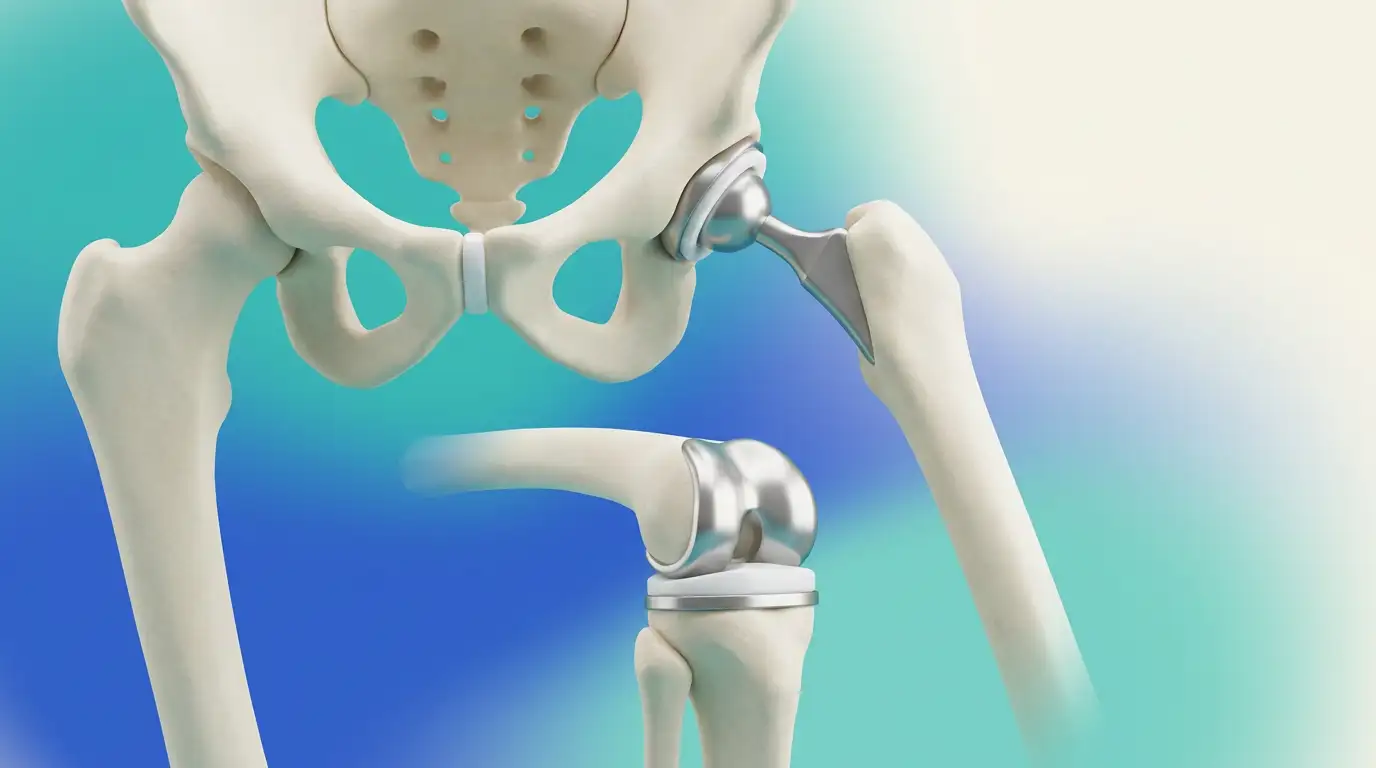
Hip and Knee Replacement Surgery
As Op. Dr. Halil İbrahim Öçalan, we provide expert hip and knee replacement surgery services in Gaziantep. In these surgical procedures performed to relieve pain and movement restrictions caused by advanced joint damage, osteoarthritis, rheumatic diseases or post-trauma, damaged joint surfaces are removed and artificial joints (prostheses) are placed.
Hip Prosthesis Surgery
Hip prosthesis surgery is applied when serious osteoarthritis or damage occurs in the hip joint. During surgery, damaged parts of the hip joint are removed and a prosthesis made of metal, ceramic or special plastic materials is placed.
Indications for Hip Prosthesis
- Hip osteoarthritis (coxarthrosis): Most common indication; wear of joint cartilage with bone-on-bone friction, severe pain and movement restriction
- Hip fractures: Femoral neck or trochanteric fractures especially in elderly patients requiring urgent prosthesis application
- Rheumatic diseases: Joint damage resulting from inflammatory processes like rheumatoid arthritis, ankylosing spondylitis
- Congenital disorders: Secondary osteoarthritis due to hip dysplasia, congenital dislocation
- Necrosis (avascular necrosis): Death of joint surface due to blood supply disorder; after alcohol use, steroid therapy or trauma
Hip Prosthesis Types
- Total Hip Prosthesis: Replacement of both acetabulum and femoral head. Most commonly used type.
- Hemiarthroplasty: Applied when only femoral head is replaced, acetabulum preserved
- Reverse Hip Prosthesis: Used in complex fractures or revision cases
Knee Prosthesis Surgery
Knee prosthesis surgery is a surgical treatment method applied in patients with advanced osteoarthritis and joint damage in the knee joint. Worn cartilage and bone surfaces in the knee joint are removed and artificial joint surfaces are placed.
Indications for Knee Prosthesis
- Advanced osteoarthritis: Most common indication; wear of knee cartilage, bone-on-bone friction, severe pain and deformity
- Rheumatoid arthritis: Joint damage due to autoimmune processes; often in both knees simultaneously
- Osteonecrosis: Bone necrosis due to blood supply disorder in knee joint
- Single compartment arthritis: Osteoarthritis only in medial or lateral compartment; indication for partial knee prosthesis
Knee Prosthesis Types
- Total Knee Arthroplasty (TKA): Replacement of both medial and lateral compartments plus patellofemoral surfaces. Most commonly used type.
- Partial Knee Prosthesis: Applied in cases with damage only in single compartment; less invasive
- Hinged Knee Prosthesis: Used in complex cases with weak or missing ligaments
Post-Surgical Recovery
2-3 days hospital stay, early mobilization programs begin muscle strengthening and walking training. Patients typically start walking with support from the first day after surgery.
Complications
- Infection (<1%, early detection and antibiotic therapy)
- Dislocation (higher risk in first 3 months)
- Blood clots (anticoagulants for prophylaxis)
- Limb length discrepancy
- Prosthesis wear (minimal risk long-term)
Patient Experience
Over 90% of patients report significant reduction in chronic pain after surgery. Range of motion increases significantly, daily activities become easier. Walking distance improves, elevator and stair use becomes easier.
Op. Dr. Halil İbrahim Öçalan's Approach
We offer comprehensive services with modern prosthesis technologies and minimally invasive techniques. Our goal is to free you from chronic pain, regain your movement freedom and improve your quality of life.
Appointment and Contact
Phone: +90 533 643 74 27 | Address: Özel Deva Hospital, Şahinbey/Gaziantep